 Lone Star Media
Clients / Slick Cactus

A commercial real estate platform built around the map.
Slick Cactus is an enterprise platform for commercial real estate brokerages. We have written every line of it, and we are still shipping.
Slick Cactus, Dallas
Commercial real estate
The entire engineering team
Live and still shipping
The situation
A commercial real estate brokerage runs on information that lives in four or five places at once. Property records in one system, contacts in another, documents in a shared drive, marketing lists in a spreadsheet, and the map in a browser tab next to all of it. Nothing agrees with anything else.
The industry's own tools made it worse. Brokers were organizing by contact when the thing they actually work on is the property, and several of them had watched a vendor discontinue the application their business depended on. Slick Cactus came to us with a clear idea: put the map at the center, build one platform underneath it, and own it outright.
What we built
A single platform where the map is the interface. Brokers search by location rather than by contact, see property types as color-coded pins, and open a full record without leaving the view.
Underneath that sits everything a brokerage needs to run: deal tracking through to close, documents filed against the property itself, branded reports generated in seconds, email campaigns sent from inside the system, and permissions that work for a solo broker or a company with offices in several states.
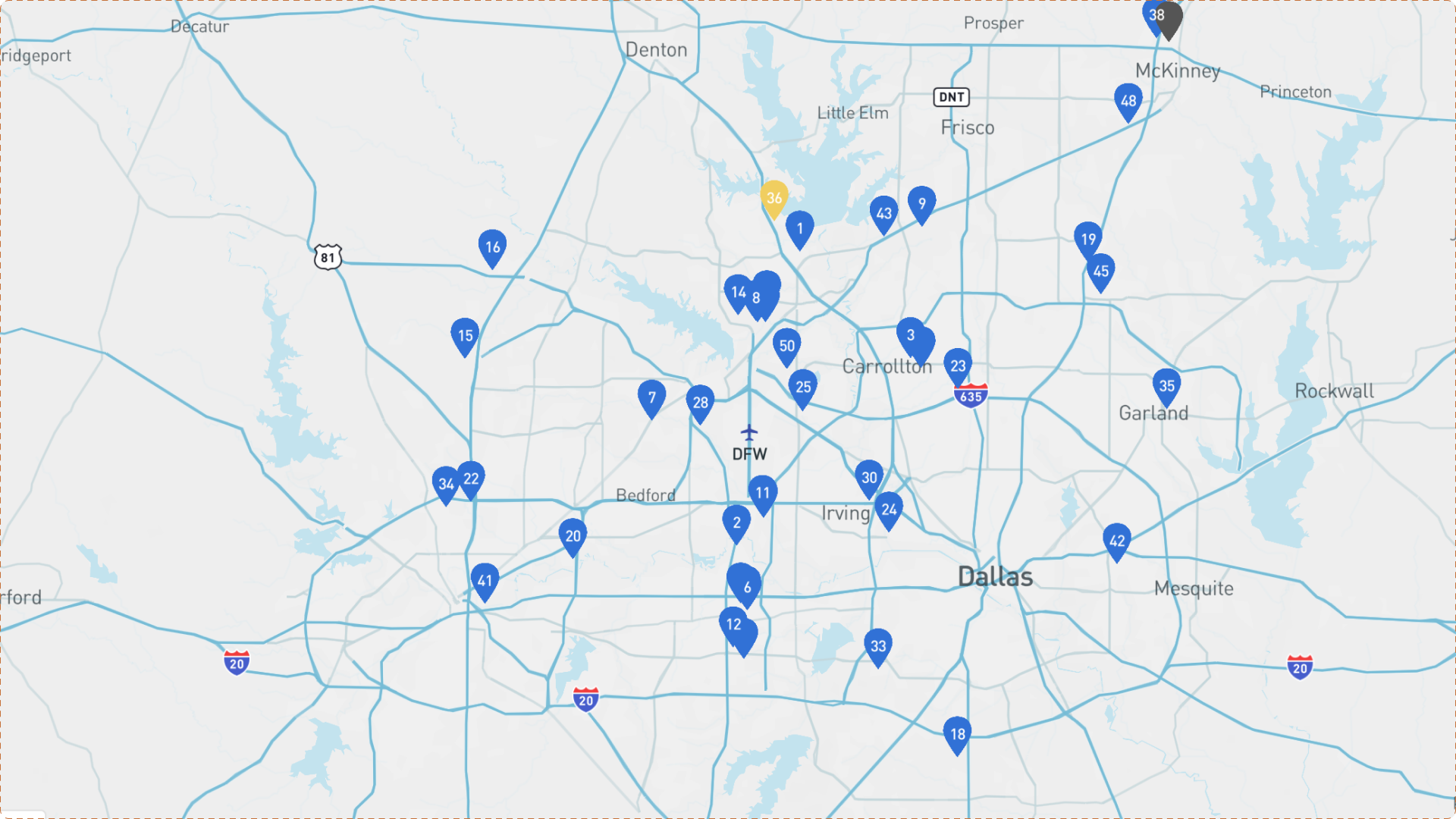
The map view. Property type reads at a glance, and the record opens without losing your place.
The parts that were hard
Any of these on its own is a project. Together they are a platform.
Maps that stay fast
Drawing thousands of properties on a map and keeping pan and zoom smooth is a different problem from drawing ten. It shaped how the data is stored, not just how it is displayed.
Data that fills itself in
County records, sales history, and tax information arrive automatically against each property, so brokers are not retyping what a public record already knows.
Permissions at company scale
Brokers compete with each other inside the same firm. Who can see which deal, at which office, reporting to whom, is a genuinely hard model to get right.
Getting data in
Every new brokerage arrives with years of history in a format nobody planned. Import has to be forgiving, and a documented connection lets their other systems keep talking.
Reports worth sending
A broker pitching a landlord needs something branded and current in the next ten minutes, not a spreadsheet export. Reports and presentations generate straight from live data.
Security that gets audited
The platform holds deal terms and client information, so it is penetration tested by an outside firm and managed accordingly. Enterprise buyers ask, and there is an answer.
Custom software
Platforms built to run for years, by the people who will still be maintaining them. See what we do →
Another storyRebuilt after a hack
Austin Rare Coins lost everything to an attack and needed a plan, not a panic. Read the case study →